The history of hearing tests dates back to ancient Greece, where Hippocrates first explored hearing loss. Over time, methods evolved from the use of tuning forks by German physicians in the 19th century to the invention of the audiometer by David Edward Hughes in 1879. By the early 20th century, electronic audiometers became standard, and after World War II, audiology pioneers Raymond Carhart and Norton Canfield refined these tools for clinical use. Today, modern audiograms include advanced tests like Pure Tone Audiometry and Automated Otoacoustic Emissions. In a significant leap, Audicus introduced the first accurate online hearing test in 2017, enabling personalized hearing aid programming at home, expanding accessibility for individuals without easy access to audiologists.
For as long as we’ve known about hearing loss, we’ve sought a way to test it. As medicine has evolved so have the methods for testing our hearing. From the Greeks to the first online test we unearth the history of hearing tests.
The first hearing test: sounds Greek to me
The history of hearing tests, or audiograms, beings in Greece. The first presumed hearing test was done by Hippocrates of Cos (think of the Hippocratic Oath for doctors) all the way back in 60-377 BC. According to HealthyHearing, this famous Greek physician was the “first in written history to use clinical research” to understand hearing loss and believed that it was due to heavy winds or injury to the skull.Methods of the Middle Ages
When we jump forward to 25 B.C, to meet Aulus Cornelius Celsus, author of one of the first medical encyclopedias. He tested for hearing loss and provided unique solutions such as surgical removal of ulcers. There were advancements during the Early and Middle Ages, but the advent of a more technological hearing test was not until the late 1800s.From tuning forks to audiometers
In the 19th century, two German physicians, Ernst Heinrich Weber and Heinrich Adolf Rinne tested patients with a tuning fork. This was to determine if the hearing damage was conductive or sensorineural. According to AudioClinic, by 1879 David Edward Hughs had created a better testing agent than a tuning fork – an audiometer. The doctor turned a knob that altered sound frequencies, and patients raised their hand when they had difficulty hearing.It’s electric!
By 1919, we saw the first electronic version of the audiometer in Germany. As World War II ended, the fathers of audiology, Raymond Carhart and Norton Canfield, worked to build specialized aural hospitals for soldiers with hearing loss. At these hospitals, they tinkered with the electronic audiometer as a hearing test, the results of which are called audiograms.Age of the audiogram
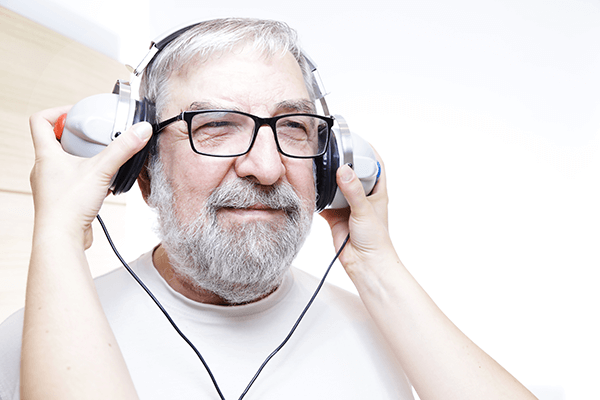
Nowadays there are more ways to receive an audiogram. When babies are born, they are administered an Automated Otoacoustic Emissions test that monitors the ear’s natural response to sound. Automated Auditory Brainstem Response tests similarly test the automatic response of nerves through sensors on a patient’s head and neck. There are also Pure Tone Audiometry tests. They are most frequently used in audiologists’ offices. These tests beep at differing tones and volumes, and the listener presses a button when they hear the beep.Modern hearing tests: let’s get digital
Throughout the history of hearing tests, the audiogram has dominated for almost a century. While online hearing checkers have emerged to give users a general idea of whether or not they should get a clinical audiogram, they couldn’t provide enough detail to replace one. In 2017, Audicus launched the first accurate Online Hearing Test that was detailed enough to program custom hearing aids to the results. The test mimics the Pure Tone Audiometry Test by testing each ear at five frequencies twice. It features error-detecting algorithms and alerts users to seek a doctor when results could point to an underlying health condition.Test Your Hearing For Free
After the Over-the-Counter Hearing Aid Act was signed in August 2017, Audicus became the first company to program hearing aids from an online test. This test that can be taken at home with an internet connection and headphones has created access for those without insurance, mobility, or access to an audiologist.Getting your hearing checked today
Today, we're fortunate to have many different options available to us when we need to assess our hearing acuity. We have choices when it comes to where we get a hearing test. From the comfort of our home - to a grocery store - to traditional hearing centers where an audiologist can check our hearing in person - we get to pick what works best for us.By: Diana Michel
Sources: Clarita's Hearing, Audioclinic.com, HealthHearing.com The above is the interpretation of From Tuning Forks to Digital Audiograms provided by Chinese hearing aid supplier Shenrui Medical. Link https://www.srmcm.com/Blog/From_Tuning_Forks_to_Digital_Audiograms.html of this article is welcome to share and forward. For more hearing aid related information, please visit Blog or take a look at our Hearing aids products