Our ears do more than just help us hear. They are complex organs that play a vital role in balance and communication. In this blog, we’ll explore the detailed anatomy of the ear, its three main sections, and how each part works together to help us hear and stay balanced.
Whether you’re trying to understand a hearing problem or simply curious about how we perceive sound, knowing the parts of the ear can help. From the outer folds to the intricate bones deep inside, this guide explains it all.
Anatomy of the Ear
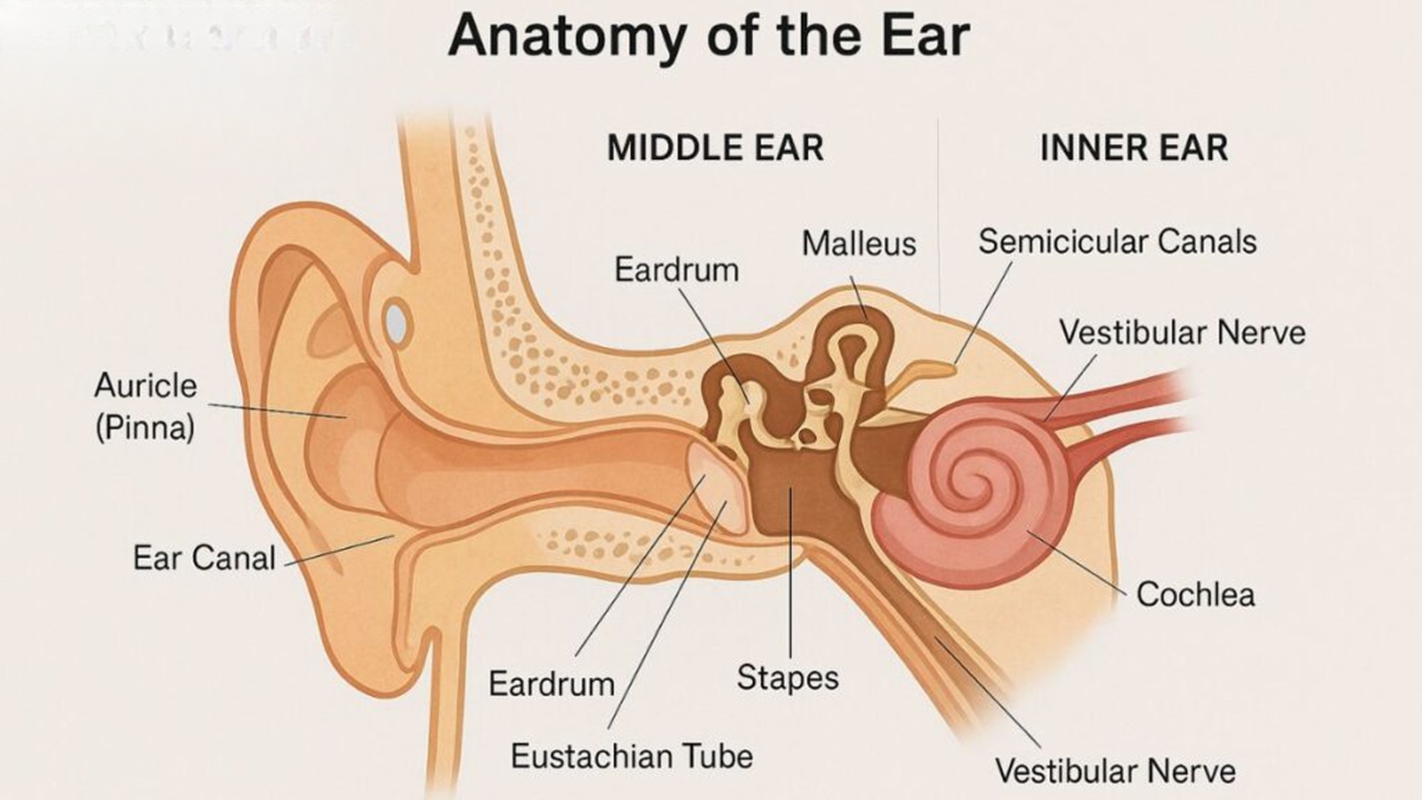
The human ear is divided into three main sections:
- Outer ear
- Middle ear
- Inner ear
Outer Ear: The Gateway for Sound
The outer ear includes:
- Pinna (Auricle): The visible part that collects sound.
- Ear Canal: A narrow passage that directs sound waves to the eardrum.
- Tympanic Membrane (Eardrum): Vibrates in response to sound waves.
This section acts like a funnel, gathering sound and guiding it inward. It’s also the first place you might notice discomfort if there’s a bug in ear or external blockage.
Middle Ear: The Sound Amplifier
The middle ear contains:
- Ossicles: Three small bones—malleus (hammer), incus (anvil), and stapes (stirrup).
- Eustachian Tube: Balances pressure between the ear and throat.
The ossicles are the smallest bones in the body, but they amplify sound from the eardrum and send it to the inner ear.
This area is sensitive to infections and blockages, often checked during a hearing test in Delhi for patients experiencing discomfort or hearing loss.
Inner Ear: Where Hearing Meets Balance
The inner ear consists of:
- Cochlea: A snail-shaped structure that translates sound vibrations into nerve signals.
- Vestibular System: Includes semicircular canals that control balance.
The anatomy of the ear is most intricate in this section. The cochlea enables hearing, while the vestibular system helps us maintain posture and orientation.
Hearing issues like loss in human hearing range often stem from inner ear damage. Early detection through professional consultation with an Audiologist in Delhi is key to proper treatment.
How the Parts of the Ear Work Together
In the anatomy of the ear, each part plays a vital role in helping us hear:
- The outer ear gathers sound.
- Sound travels through the ear canal and reaches the eardrum.
- The eardrum vibrates and transmits messages to the ossicles.
- Ossicles move and force the sound into the inner ear.
- The cochlea converts the sound into electrical signals.
- The brain interprets the sound.
Ear Function Summary
Part of Ear | Main Structures | Function |
Outer Ear | Pinna, Ear Canal | Collects and directs sound |
Middle Ear | Ossicles, Eustachian Tube | Transfers and amplifies sound |
Inner Ear | Cochlea, Semicircular Canals | Hearing and balance |
Types of Hearing Loss
There are three main types of hearing loss: conductive, sensorineural, and mixed hearing loss.
- Conductive Hearing Loss: This occurs when sound is blocked from reaching the inner ear due to issues in the ear canal, eardrum, or middle ear. Common causes include earwax buildup, fluid behind the eardrum (otitis), or damage to the ear bones. Most conductive hearing loss can be treated with medication, surgery, or hearing aids.
- Sensorineural Hearing Loss: This type results from damage to the inner ear (cochlea) or the auditory nerve. Causes include aging, loud noise exposure, infections, or genetics. It’s usually permanent, but hearing aids can often improve sound clarity and communication.
- Mixed Hearing Loss: Mixed hearing loss is a combination of conductive and sensorineural issues. It involves both a blockage in the outer/middle ear and damage to the inner ear or auditory nerve.
Tips to Keep Your Ears Healthy
Taking care of your ears is simple if you follow these tips, especially when you understand the anatomy of the ear:
- Clean your ears gently: Avoid using cotton swabs deep inside.
- Protect your ears from loud sounds: Use earplugs or earmuffs.
- Avoid inserting objects: This can damage the eardrum.
- Keep ears dry: Moisture can cause infections.
- Stay healthy overall: A balanced diet supports not just hearing, but the entire anatomy of the ear to function properly.
Quick Recap Table
Section | Key Structures | Purpose |
Outer Ear | Pinna, Ear Canal, Eardrum | Collects sound |
Middle Ear | Ossicles, Eustachian Tube | Transfers and amplifies vibrations |
Inner Ear | Cochlea, Vestibular Organs | Converts sound and controls the balance |
Conclusion
The anatomy of the ear shows how complex and important our hearing system is. Each part of the ear from the outer section to the inner core has its own special task. These parts of the ear work in harmony to make sure we hear well and stay balanced every day. Understanding middle ear anatomy and inner ear anatomy can help you spot problems early and take better care of your ears.
When we know how our body works, we can protect it better. Keep your ears clean, protect them from loud noise, and seek help when something doesn’t feel right. A little care can keep your hearing sharp for life.