This week’s Audicus blog explores the latest advancements in hearing aid technology and hearing health, highlighting the innovative VEST (Versatile Extra-Sensory Transducer) project led by neuroscientist David Eagleman. The VEST is a groundbreaking piece of clothing technology that converts sound into vibrations, allowing users to "feel" their surroundings through sensory substitution. This technology aims to help individuals with severe hearing loss or deafness by using their sense of touch as an alternative to hearing, while also offering the potential for additive sensations in those with normal hearing. Unlike traditional hearing aids or cochlear implants, which require surgery, the VEST is non-invasive, discreet, and more affordable, making it a promising alternative for hearing-impaired individuals worldwide.
In this week’s Audicus blog find out about the latest news when it comes to hearing aid technology and hearing health!
VEST and Hearing Aid Technology
VEST, an abbreviation of Versatile Extra-Sensory Transducer, is a kickstarter project headed by neuroscientist David Eagleman at the Baylor College of Medicine in Houston, Texas. Dr. Eagleman has created a revolutionary piece of clothing technology, a vest that can transmit sensory information through a series of vibrations. In this versatile extra-sensory transducer, external sound undergoes a process called real- time compression and is then relayed to a Bluetooth system. From the Bluetooth system, the sound information then undergoes a process called sound-to-touch mapping, which results in a vibrational output from the vest.
Sensory Substitution for Hearing
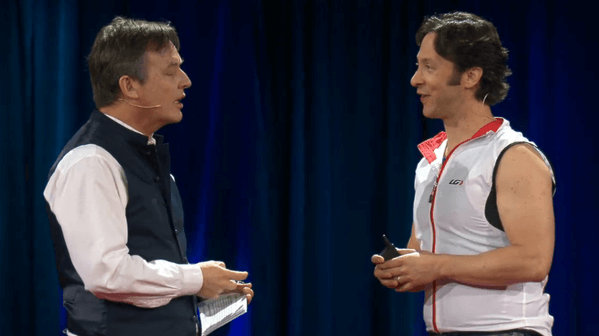
A major goal of the VEST project is sensory substitution, or using an alternative human sense to compensate for a human sense you may be lacking. Sensory substitution was pioneered in 1969 by Paul Bach-y Rita. For individuals who are deaf or have severe hearing loss, this would mean relying on their sense of touch in order to interpret their surroundings rather than a compromised or absent sense of hearing. Dr. Eagleman’s project also focuses on the concept of additive sensations. In other words, assigning these VEST vibrations to a person with an uncompromised sense of hearing would not be used to compensate for a sense that they are lacking, but would add a new experience in how they view the external environment. For example, Eagleman recently did a TED Talk where he demonstrated the vest on himself. In addition to being able to hear himself speak, Eagleman could also feel the tactile sensations of the vest as it converted his voice into a series of vibrations. Users that wear the vest over a period of 3 months become well adapted to interpreting the vibrations as they relate to sounds. This unique form of technology can be worn discreetly under clothing and may become a likely alternative to cochlear implants, which normally require invasive surgery. The versatile extra-sensory transducer is less expensive than many other hearing aid devices and can be utilized by countries for which certain hearing devices are too costly. In October 2014 VEST raised more than $47,000 with nearly 290 contributors.
By: Aaron Rodriques
The above is the interpretation of How Does the VEST System Help with Hearing Loss? provided by Chinese hearing aid supplier Shenrui Medical. Link https://www.srmcm.com/Blog/How_Does_the_VEST_System_Help_with_Hearing_Loss.html of this article is welcome to share and forward. For more hearing aid related information, please visit Blog or take a look at our Hearing aids products