Key points:
-
Dizziness is a common symptom of many disorders, including inner ear disorders.
-
Common inner ear disorders that cause dizziness are Meniere's disease, labyrinthitis, and BPPV.
-
Learning the different symptoms can make it easier to figure out which of these conditions is the root problem.
The inner ear contains several tiny organs that are responsible for our hearing and sense of balance.
When something goes wrong in the inner ear, it can lead to intense dizziness and sometimes hearing loss and tinnitus (ear ringing). It also can trigger disorientation, nausea, and vomiting, a frightening experience.
With your doctor's help, figuring out which inner ear problem you have is important as the treatment will vary.
Let’s take a look at three common ones: Meniere’s disease, labyrinthitis, or BPPV, which stands for benign paroxysmal positional vertigo.
Meniere’s disease
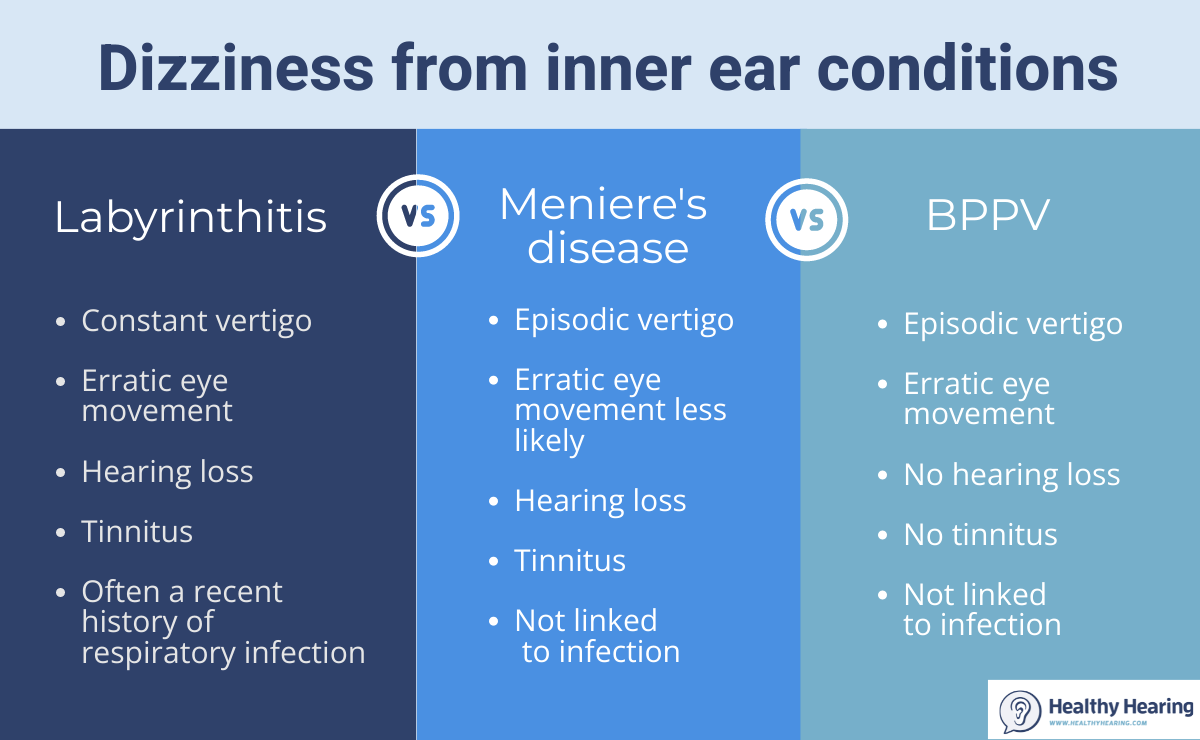
It's not known what causes Meniere's disease. People with Meniere’s experience:
- hearing loss or ear stuffiness
- ear ringing
- dizziness that comes and goes
How do you know it’s Meniere’s and not labyrinthitis? People with labyrinthitis typically have a history of a recent cold or infection. With Meniere’s, there’s no obvious recent trigger. It also tends to come and go (intermittent), whereas labyrinthitis is intense for a few days and slowly goes away, especially if you get medication. With Meniere's, erratic eye jerking can happen, but isn't as common.
How do you know it’s Meniere’s and not BPPV? People with BPPV experience intense dizzy spells but do not experience clogged hearing or tinnitus. Erratic eye movement is very common with BPPV.
How does Meniere's affect hearing?
A sense of having clogged ears is common with Meniere's. Long-term, it can lead to low-frequency hearing loss (male voices, thunder, etc, are harder to hear), though any pitch can be affected. Over time, the dizziness may improve but hearing loss may get worse or become permanent.
Labyrinthitis (inner ear infection)
When the membrane that surrounds the inner ear (known as the labyrinth) swells or gets inflamed, it causes labyrinthitis. This can lead to these classic symptoms:
- Persistent vertigo that makes the room spin
- hearing loss
- ear ringing (tinnitus)
- nausea and vomiting
- erratic or jerking eye movements known as nystagmus
What distinguishes labyrinthitis from Meniere's and BPPV? It is almost always caused from an infection. The body responds with inflammation, which causes the inner ear's balance organ to become inflamed and swollen, leading to dizziness.
The most common reason a person gets labyrinthitis is a recent viral infection, including the common cold and middle ear infections. In more rare cases, meningitis and mumps also can infect the inner ear (and so can many infections).
How does labyrinthitis affect hearing?
When the ear is inflamed, you may struggle to hear, especially higher-pitched sounds. You also may notice ringing in your ears.
The good news? These changes are usually temporary, especially if you get prompt treatment. Without treatment, hearing loss and tinnitus may be long-term or even permanent.
Benign paroxysmal positional vertigo (BPPV)
What is BPPV? It may sound strange, but your inner era contains little crystals known as otoconia that help you stay balanced. They move as you move, sending your brain signals about how you’re positioned. If these rocks get stuck or otherwise do something out of the ordinary, vertigo is the result. This is BPPV. It can cause erratic or jerking eye movements, too.
The good news: It’s relatively easy to move the loose crystals back into their correct locations, with a physician’s help, of course. After that you’ll feel better fast.
How does BPPV affect hearing?
BPPV does not affect your hearing. This is the primary way to know it’s not Meniere’s or labyrinthitis, because both of those conditions affect hearing. People with BPPV also do not experience any tinnitus (ear ringing) or pressure in their ears.
Other possible auditory conditions causing dizziness
Vestibular neuritis (or neurontitis)
Sometimes a person can develop an inner ear infection that doesn’t cause hearing loss. While treatment is largely the same as labyrinthitis, the name of this condition is different. When no hearing loss is present, it's referred to as vestibular neuritis, since it generally means only the balance organs (the vestibular system) are inflamed and not the entire inner ear labyrinth.
Acoustic neuroma
Acoustic neuromas are benign tumors can form on the auditory nerves that transmit information to the brain. They can cause dizziness, "double" hearing, facial numbness, headaches and other problems.
Get help for dizziness and hearing loss
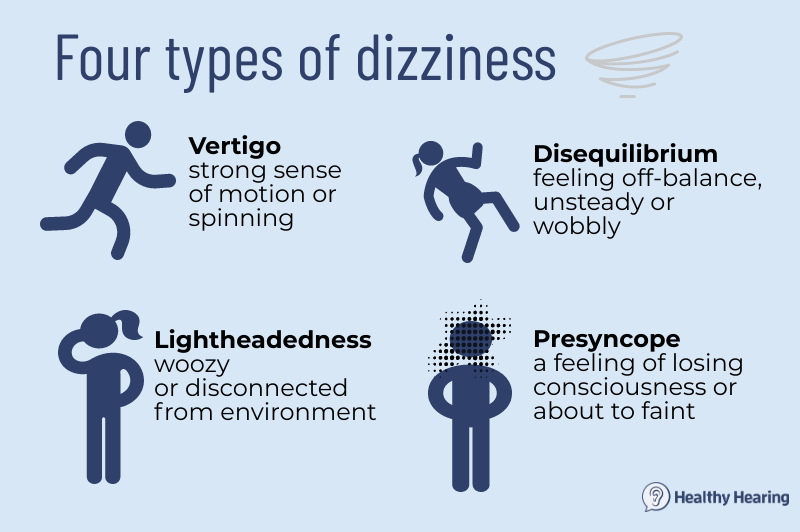
Because you can’t diagnose these conditions at home, it’s important to get medical treatment. The sooner you get treatment the more likely you are to recover without permanent damage.
If you're suffering from dizziness and hearing loss, see your doctor ASAP. They can run a full range of tests to narrow down what's wrong, and get you on the right treatment path. In most cases, you'll want to start with your primary care doctor, or, an ENT, a doctor that specializes in disorders of the ear, nose and throat.
The above is the interpretation of Meniere's vs. Labyrinthitis vs. BPPV: How to Tell provided by Chinese hearing aid supplier Shenrui Medical. Link https://www.srmcm.com/Blog/Meniere_s_vs._Labyrinthitis_vs._BPPV_How_to_Tell.html of this article is welcome to share and forward. For more hearing aid related information, please visit Blog or take a look at our Hearing aids products