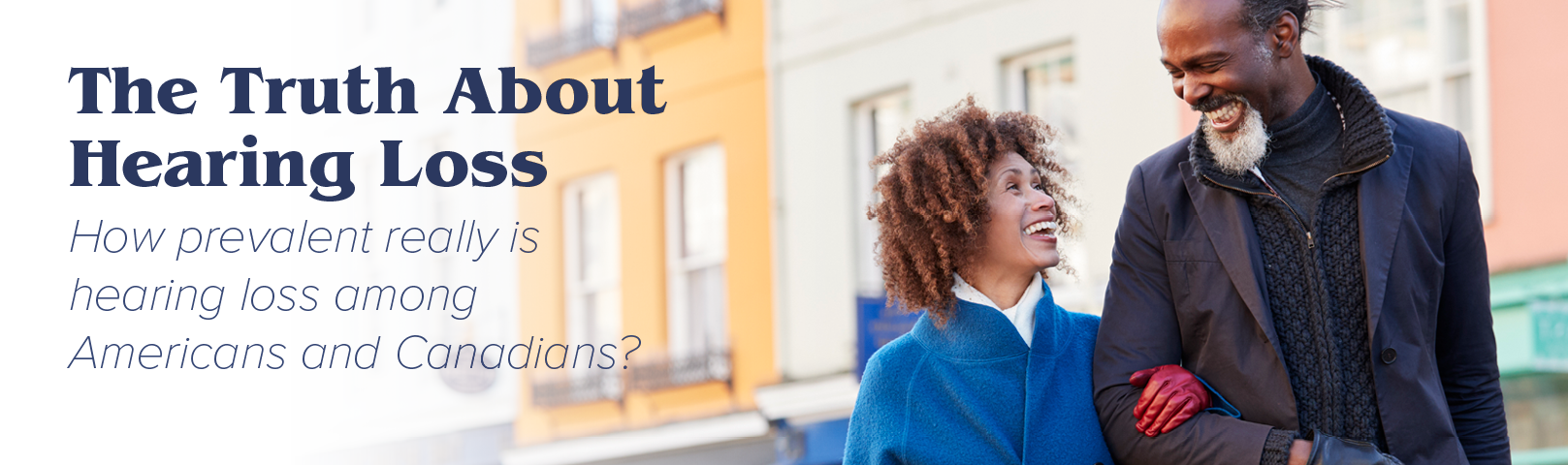
How many people in your life have hearing difficulties? One person? Two people? A handful? No one? The actual number is quite possibly more than you think, because hearing loss — the inability or reduced ability to perceive sounds that enter the ear — is much more common than many realize.
In the United States and Canada together, for example, millions of people live with hearing loss. Numbers may vary per organization, government agency, or study, but:
- Johns Hopkins researchers have estimated that 20 percent of Americans 12 or older — about one out of every five — has some form of hearing loss.
- The Canadian Hearing Society has stated that nearly a quarter of adult Canadians — close to one in four — has reported experiencing some level of hearing impairment.
In both countries, hearing loss also represents one of the top chronic physical conditions — even, in the case of the United States, ahead of diabetes or cancer. It’s a growing concern affecting children and adults, including approximately 34 million youth worldwide. In fact, it’s one of the most common birth defects in Canada and possibly the most common one in the U.S.
The good news?
Most hearing loss can be effectively managed with solutions such as hearing aids, helping you stay connected to the people, places, and experiences that matter most.
The bad news?
Only a fraction of those who could benefit from hearing help actually seek or receive it, making hearing loss an undertreated issue.
Even worse, hearing loss not only impacts communication but can go hand in hand with other problems such as social isolation, depression, diabetes, dementia, heart disease, and risk of falls.
FEBRUARY IS HEART MONTH
Did you know? Like hearing loss, cardiovascular disease — including heart disease and stroke — is a global public-health challenge. It’s the No. 1 killer worldwide, with nearly 18 million deaths annually per World Health Organization estimates, and is linked to hearing loss.
Precisely how cardiovascular disease and hearing loss are connected isn’t yet conclusive in all cases, but researchers have found, for example, that those with heart disease are 54 percent more likely to experience a hearing loss — even more so if they’ve suffered a heart attack.
Some risk factors such as age, gender, and family history can’t be helped, but healthy choices such as the following can make a difference in helping prevent either condition:
- Avoiding tobacco
- Following a healthy diet
- Exercising regularly
- Getting regular hearing and overall checkups
Take it to heart, and spread the word!
The above is the interpretation of The Surprising Statistics on Hearing Loss in North America provided by Chinese hearing aid supplier Shenrui Medical. Link https://www.srmcm.com/Blog/The_Surprising_Statistics_on_Hearing_Loss_in_North_America.html of this article is welcome to share and forward. For more hearing aid related information, please visit Blog or take a look at our Hearing aids products