Evie Smith, at just three months old, became the youngest person in the UK to receive a cochlear implant after contracting pneumococcal meningitis at three days old, which caused severe hearing loss. The infection led to ossification in her inner ear, disrupting normal hearing, and required immediate surgery. Evie underwent two cochlear implant procedures—one for each ear—and recently had them activated at St. Thomas NHS Hospital in London. Her parents are hopeful that the implants will enable her to attend a mainstream school. Pneumococcal meningitis, though often harmless in pre-school children, can be fatal or cause severe complications like hearing loss in individuals with weaker immune systems. Evie spent six weeks in the Pediatric Intensive Care Unit at Evelina London Children’s Hospital and was briefly placed on a ventilator. Audiologists fitted her with external processors that intercept sounds and relay them to internal cochlear implants, which convert sound into electrical si
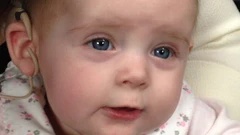
After contracting a meningitis infection that required immediate surgery, Evie Smith has become the youngest person in the United Kingdom to receive a cochlear implant.
Meningitis and Hearing Loss: A Call for a Cochlear Implant
Evie Smith was fitted with cochlear implants when she was only three months old, initially having one cochlear implant placed in the right ear and a second implant in the left ear weeks later. Evie has recently been sent to St. Thomas NHS hospital in London to have the cochlear implant activated. Evie’s mother and father, Jenny Harvey and Barrie Smith, are optimistic about the results of Evie’s implant surgery, hoping that she can attend a mainstream school. Evie Smith became deaf after contracting pneumococcal meningitis at the age of three days. Pneumococcal meningitis is normally caused by certain species of bacteria that infect brain and spinal chord tissue. The bacteria release toxins into the tissues, often resulting in swelling, inflammation, headaches and irritability in infants. Meningitis leads to ossification, or formation of bony growths, in the inner ear, which can severely disrupt normal hearing. Although the meningitis bacteria itself is carried by nearly half of pre-school age children and is mostly harmless, it can prove harmful for individuals with weak immune systems. Evie was assigned to the Pediatric Intensive Care Unit at Evelina London Children’s Hospital (located at St. Thomas’ Hospital) for 6 weeks after the infection was discovered, where she was placed on a ventilator for a brief period of time. The chief audiology scientist at St. Thomas’ Hospital, Katherine Wilson, M.Sc., noted that the severity of Evie Smith’s pneumococcal meningitis symptoms warranted the fitting of cochlear implants and their processors at such a young age. If left untreated, pneumococcal meningitis can even prove to be fatal.Hearing Loss and Cochlear Implant Gadgetry
The audiology specialists involved in Evie’s treatment placed external processors on the outside of her ears. These processors can intercept sounds and relay the information to internal cochlear implants. Similar hearing aid devices include bone-anchored hearing aids, implants imbedded inside the skull with a removable, external piece, and electric cochlear implants, which change sound into an electrical signal and then relay it to electrodes placed in the cochlea.Cochlear Implants, Hearing Aids, and Hearing Loss in the UK
There are about 5,000 children in the United Kingdom that have cochlear implants. According to the University of Manchester, only about one-fifth of middle-aged individuals with hearing damage have hearing aids, making the lack of hearing loss diagnosis and treatment in the U.K. a significant problem. Further support for surgery in infants with hearing damage can be found in case studies from the Washington University School of Medicine in St. Louis, Missouri. It was found that patients with untreated hearing loss in early childhood displayed relatively poor improvement in hearing performance when supplied with hearing aids later on in life. Evie Smith’s drastic recovery and improvement in the face of a debilitating illness highlight the success of hearing aid treatment in patients at an extremely early age.by Aaron Rodriques
The above is the interpretation of Who is the Youngest Cochlear Implant User? provided by Chinese hearing aid supplier Shenrui Medical. Link https://www.srmcm.com/Blog/Who_is_the_Youngest_Cochlear_Implant_User.html of this article is welcome to share and forward. For more hearing aid related information, please visit Blog or take a look at our Hearing aids products