Musical Ear Syndrome (MES) is a rare condition where individuals perceive music or sounds without any external source, often linked to hearing loss and affecting about 1 in 10,000 people over the age of 65. While it isn’t a mental illness but rather a brain activity anomaly, it shares similarities with tinnitus. The syndrome can result from brain changes due to epilepsy, aneurysms, or recreational drug use. Prevention involves avoiding prolonged exposure to loud noises and using earbuds cautiously; however, there is no cure for MES at present.
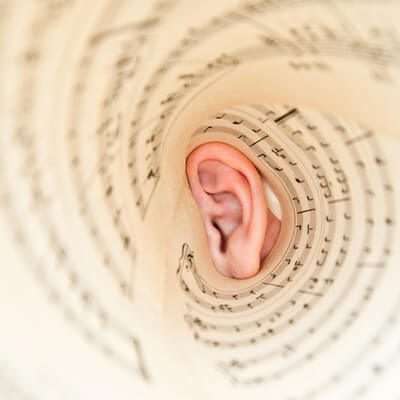
Have you ever heard about musical ear syndrome or what causes it? Learn more in this week’s Audicus blog! Do you sometimes hear music, even when there isn't any playing? This may be a result of Musical Ear Syndrome, a phenomenon in which your brain is activated in regions responsible for processing sound, all without the presence of external stimuli.
Musical Ear: A Result of Hearing Loss
Musical Ear Syndrome normally affects senior citizens with hearing loss. The condition affects people of varying ages who may or may not have hearing loss. It affects about 1 in 10,000 people over the age of 65. People can expect to hear a wide range of sounds with this diagnosis. This includes everything from faint noises to musical symphonies. In one extremely rare case of musical ear, Cath Gamester, a resident of Liverpool, England, heard as many as six songs during her experiences! Musical ear can have a wide range of frequencies. In Gamester’s case, the episodes were continuous. The condition may have even affected early musicians from the 19th century. Robert Schumann, a German composer from the 1800’s, experienced sounds of music without any actual melodies.
Not a Mental Illness
Although a lot remains unknown about musical ear, what is known is the condition doesn’t reflect mental health. The person affected by this condition does not have a mental illness. It is completely different from schizophrenia, an actual mental illness that is documented in the National Institute of Mental Health. A similar condition to musical ear is tinnitus. Tinnitus is a ringing or buzzing in the ear that is caused by hyperactivity of the brain rather than direct external stimuli.
The McGurk Effect
The idea of the human brain confusing or misconstruing our senses is not unheard of. The McGurk Effect is a phenomenon that shows what we see can actually influence what we hear! For example, the sound of a person repeating a syllable over and over again can sound different depending on what we see. The syllable heard is similar to the syllable mouthed noiselessly from a person in your focus of vision, rather than an out-of-sight person who is actually saying a syllable out loud. In rare cases, people who experience brain changes after epilepsy-induced seizures or aneurysms may experience musical ear. Recreational drugs such as LSD, alcohol and marijuana can cause musical ear-type symptoms in some circumstances. Medicinal drugs also carry a risk of triggering musical ear. Check with your doctor about the side effects of any medications you choose to take.
The Best Solution is Prevention
A good way to lower your chance of experiencing musical ear, tinnitus, and other conditions related to hearing loss is to avoid exposure to loud noises. Specifically, try to avoid loud noises over extended periods of time. Take short, quiet breaks when attending loud venues like music concerts. Use discretion when using earbuds, as these are also related to hearing loss. There is no official cure for Musical Ear Syndrome. One of the best ways to avoid this condition is prevention.
By: Aaron Rodriques
The above is the interpretation of Why Do I Hear Music When None is Playing? provided by Chinese hearing aid supplier Shenrui Medical. Link https://www.srmcm.com/Blog/Why_Do_I_Hear_Music_When_None_is_Playing.html of this article is welcome to share and forward. For more hearing aid related information, please visit Blog or take a look at our Hearing aids products