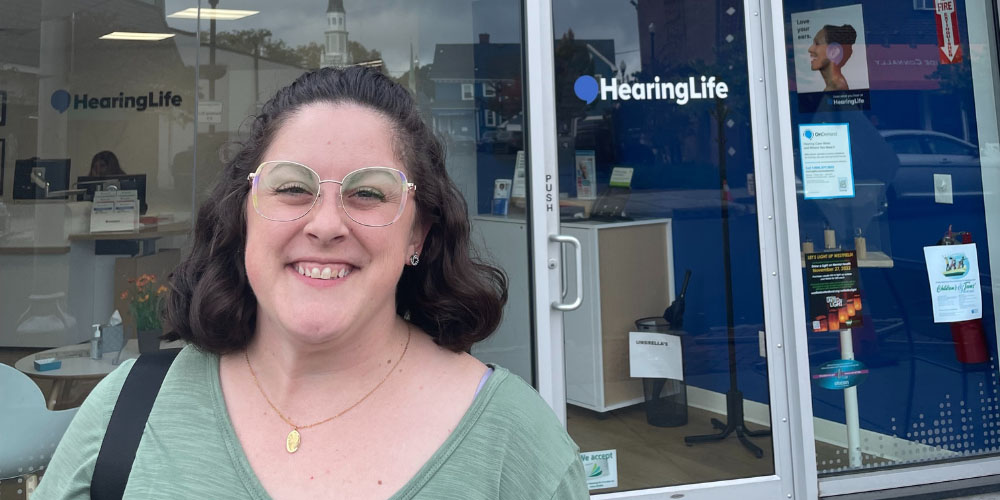
When you visit your audiologist’s office, it’s your ability to hear that’s the focus of the visit. Considering the way the brain changes in response to a decline in your ability to hear, it makes sense to consider having a cognitive screening during your visit.
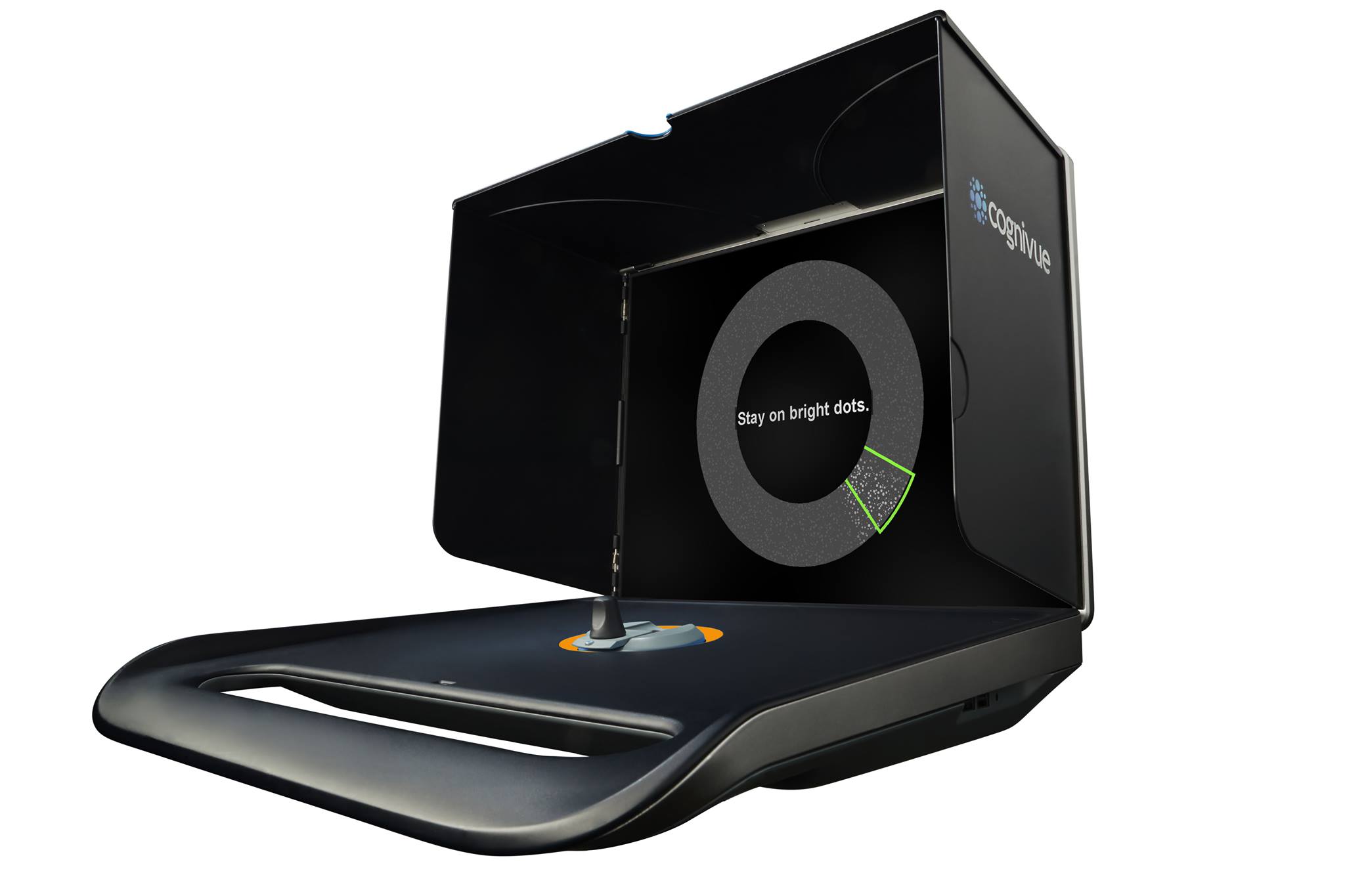
cognitive impairment, and can be used at
hearing aid clinics and other healthcare
settings.
That’s where Cognivue comes in—the company makes an FDA-cleared test of cognitive function.
“It’s a great tool,” says licensed hearing instrument specialist Karen Shaffer-Fullwood of Clarity & Comfort Hearing Center in Nottingham, Maryland.
Here, a look at how Cognivue works, and more on why screening your cognitive function during an audiologist visit can be particularly meaningful.
How Cognivue works
If your audiologist (or any other medical professional you visit) has access to Cognivue, you can use the machine to take the 10-minute cognitive test watching a brief video.
The self-assessment examines the following:
- Visuospatial
- Executive function and attention
- Naming and language
- Memory
- Delayed recall
- Abstraction
- Reaction time
- Speed processing
“People are intrigued” by the Cognivue screening process, which looks a lot like a game, Shaffer-Fullwood says. Many find it more challenging than expected, and it requires concentration and focus to complete, she says.
After the assessment, a report will be available with a score, which will either indicate low cognitive impairment, moderate to severe cognitive impairment, or normal cognitive function.
If patients do get low scores, typically Cognivue would recommend a referral to their primary care physician, says Douglas L. Beck, AuD, a former vice president of clinical sciences at Cognivue. That’s important, since the Cognivue is a screening test, and the score is not a diagnosis.
Cognivue differs from other cognitive screening tools available—such as the Psychogeriatric Assessment Scales (PAS) and General Practitioner Assessment of Cognition (CPCOG)—in its speed, and in that patients perform the test themselves (which has the potential to remove bias).
At Shaffer-Fullwood’s office, the charge for a Cognivue assessment is $75.
The link between hearing and cognitive abilities
There’s an obvious answer to the question of how you hear: your ears. But it’s not just ears that are involved in hearing—processing and interpreting sounds occurs in your brain. And when your hearing degrades, the parts of your brain responsible for decoding sounds take a break.
“Neurons abandon those areas and go elsewhere to fire,” Shaffer-Fullwood says.
One study, for instance, found that minor hearing loss can make the part of your brain that manages auditory processing shift focus to visual processing instead. Along with being reassigned to other tasks, there can be atrophy in the parts of the brain that typically focus on auditory tasks when they’re not used for hearing.
And, other areas of your brain compensate for the hearing loss, working harder to help you hear. That is, “you’re stealing resources to hear,” Shaffer-Fullwood says.
Much remains unknown when it comes to hearing loss and cognitive decline.
But, as a 2021 review in the peer-reviewed journal Life notes, “Hearing loss appears as a risk factor for cognitive impairment.” And a recent meta-analysis of 31 studies with 137,484 participants published in JAMA Neurology points to the benefits of hearing treatments, finding that using “hearing aids and cochlear implants is associated with a decreased risk of subsequent cognitive decline.”
Looking at health holistically
Even with all that remains to be explored about hearing loss and cognition, it’s clear that incorporating cognitive assessments while examining hearing is a practice that makes sense.
Cognitive problems can present like listening disorders, Beck points out. Through a full battery of assessments, hearing experts can help pin down precisely what’s happening. Based on cognitive assessment results, the next step may involve a referral to other doctors.
One other reason people may want to take the Cognivue assessment at the audiologist’s office: a baseline. That’s one of the benefits Shaffer-Fullwood sees. “Once they treat their hearing loss, they can come back and retake the test and see the repair to the brain that's going on,” she says.
The above is the interpretation of Why Your Audiologist May Screen Your Cognition provided by Chinese hearing aid supplier Shenrui Medical. Link https://www.srmcm.com/Blog/Why_Your_Audiologist_May_Screen_Your_Cognition.html of this article is welcome to share and forward. For more hearing aid related information, please visit Blog or take a look at our Hearing aids products